- OG Approved AI & Tech News
- Posts
- The OG Intelligence Report - Issue #2
The OG Intelligence Report - Issue #2
The Ultimate AI & Finance Intelligence Pack — Handpicked by OG
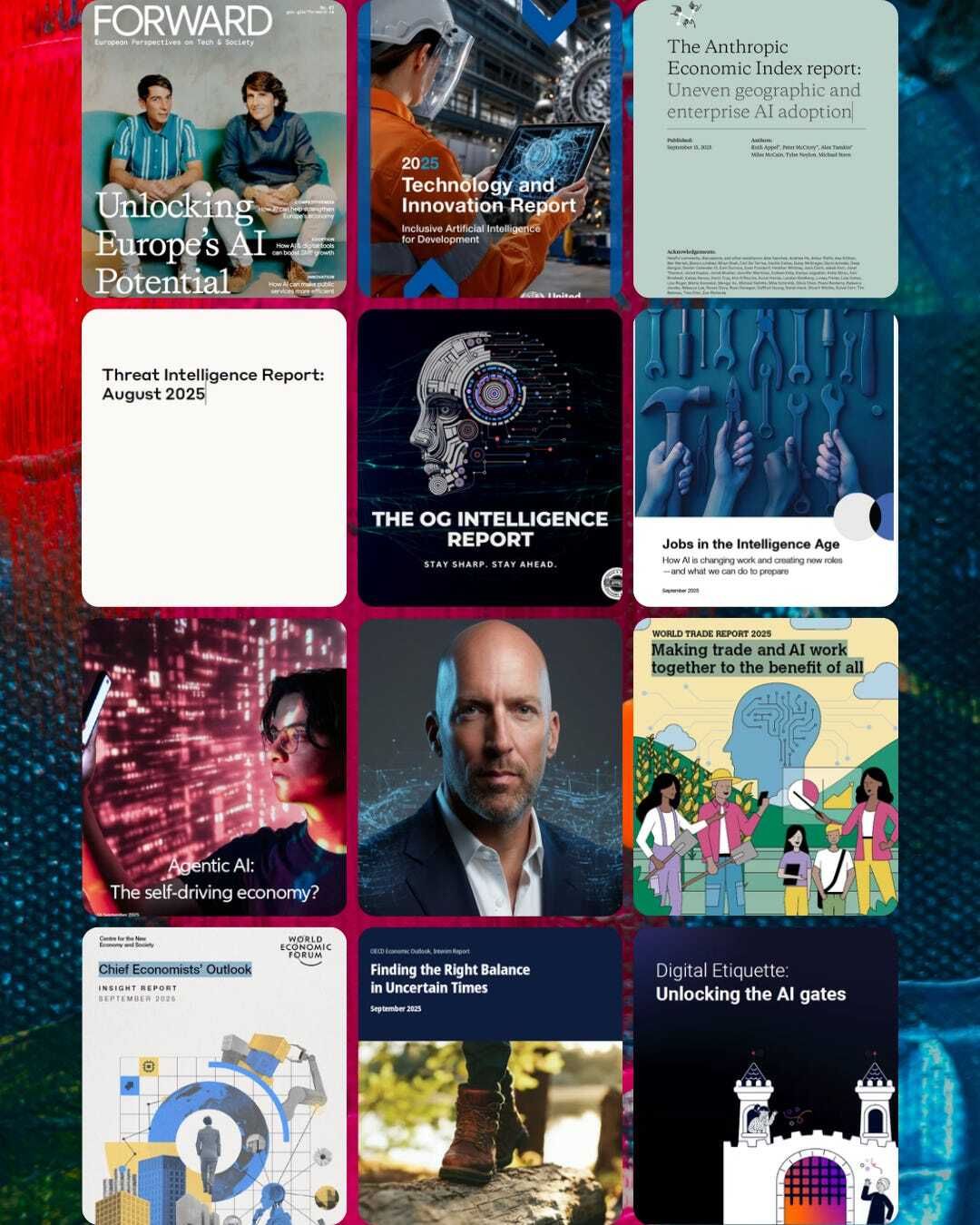
AI, Work, and the Human Future
This second issue brings you the sharpest reports on how AI is reshaping work, leadership, competitiveness, and global development.
The sources range from Google, Allianz, OpenAI, UNCTAD, and the Adaptavist Group to major global institutions and economists. The scope is broad: from the factory floor and small businesses, to agentic AI economics, to global governance.
Why now? Because AI is no longer just about enterprise adoption — it’s about who gets access, who captures value, and how societies adapt. The stakes are rising fast: jobs, wages, social contracts, environmental resources, and even rights at work.
What you’ll learn from this issue:
Where the jobs are moving: AI is reshaping work in real time, with wage premiums for AI skills now exceeding 50%.
Agentic AI’s economic shockwave: productivity gains of USD 2.6–4.4 trillion are forecast, but so is the largest labor substitution risk since the Industrial Revolution.
The equity divide at work: high earners, CEOs, and senior staff get more AI training and satisfaction, while younger and lower-income workers are left behind.
Europe’s race for competitiveness: infrastructure, adoption, and sovereignty will decide if the continent catches up or lags further.
AI for development: the UN warns that without inclusive policies, frontier AI could widen inequality instead of closing gaps.
This isn’t hype. It’s the evidence base for leaders who need to act with clarity in Q4 2025: whether you’re a policymaker, enterprise exec, or founder.
💡 Each PDF comes with a distilled summary so you can scan fast and dive deep where it matters.
👉 Scroll down and explore. This is your no-fluff map of how AI is rewriting the rules of work, leadership, and human progress.
1. Unlocking Europe’s AI Potential
KEY CONCEPTS
🗝️ AI as Europe’s Competitiveness LeverAI is framed not just as a technology race, but as the missing ingredient for Europe to close productivity gaps with the US and Asia.
🗝️ Infrastructure = SovereigntyFrom supercomputers to AI chip fabs, Europe’s future in AI hinges on building its own backbone instead of relying on foreign providers.
🗝️ Public Services as AI’s TestbedAI adoption in health, cybersecurity, and public administration is where Europe can leapfrog — not just in startups, but in how states deliver value to citizens.
LESSONS LEARNED
🧠 Adoption > InventionEurope doesn’t need to invent every frontier model — it needs to scale and integrate AI into SMEs, hospitals, and governments where ROI is immediate.
🧠 Policy Can Accelerate or StallThe EU’s AI Continent Action Plan shows how coordinated regulation, infrastructure funding, and skills programs make or break competitiveness.
🧠 AI Is a Shared ProjectPartnerships between startups, corporates, and governments are the real differentiator — Europe can’t afford silos if it wants to compete globally.
WHY IT’S VALUABLE
⚡ Exec-Ready Narrative: Gives leaders in Europe a language to frame AI not as hype, but as GDP impact, sovereignty, and citizen services.
⚡ Bridges Policy & Business: Rare report that speaks to policymakers, CEOs, and startup founders in the same breath — useful for multi-stakeholder talks.
⚡ Actionable Focus: Anchors on infrastructure, skills, and adoption — the three levers any executive can map against their own strategy.

2. Digital Etiquette: Unlocking the AI Gates
KEY CONCEPTS🗝️ AI Access Is UnequalHigh earners and those in senior roles receive better AI training, tools, and satisfaction. Lower-income and junior staff are left behind.
🗝️ Training = Confidence + ROIEmployees with 20+ hours of AI training show higher confidence, productivity, and ability to prove business value.
🗝️ Generational & Gender Gaps PersistYounger workers feel threatened by AI; women report fewer opportunities to access AI training.
LESSONS LEARNED🧠 Upskilling Isn’t Evenly SharedCEOs and top earners are shaping AI ROI, while interns and entry-level staff see limited benefits.
🧠 Culture Shapes AdoptionFear of judgment or job loss keeps younger staff from openly using AI at work.
🧠 Equity Matters for ScaleWithout broad access, AI creates a “two-tier workplace” where value capture is uneven.
WHY IT’S VALUABLE⚡Exposes Workplace Reality: Cuts through hype with data showing who wins and loses from AI adoption.⚡Leadership Guide: Helps CHROs and executives see where inclusion gaps could derail transformation.⚡Practical Roadmap: Offers actionable recommendations for equitable AI rollout.

3. Agentic AI: The self-driving economy?
KEY CONCEPTS🗝️ Trillions in PlayAgentic AI could add USD 2.6–4.4 trillion annually to the global economy.
🗝️ Automation vs. AugmentationBiggest productivity gains come when AI augments humans, not replaces them.
🗝️ Labor Market ShockwaveHigh-risk roles (admin, routine knowledge work) face substitution; leadership must manage disruption.
LESSONS LEARNED🧠 Adoption Pace = Competitive EdgeFirms moving first in agentic AI widen productivity and margin gaps.
🧠 Scaling Is Harder Than PilotsMany organizations are stuck in proof-of-concept without governance or ROI frameworks.
🧠 Sector Exposure VariesBanking, insurance, and customer operations are early winners; healthcare and government lag.
WHY IT’S VALUABLE⚡ Board-Level Numbers: Quantifies the stakes in trillions — execs can’t ignore.⚡ Balanced View: Clear on both potential gains and workforce risks.⚡ Playbook Ready: Gives leaders a framework to prioritize AI investments.

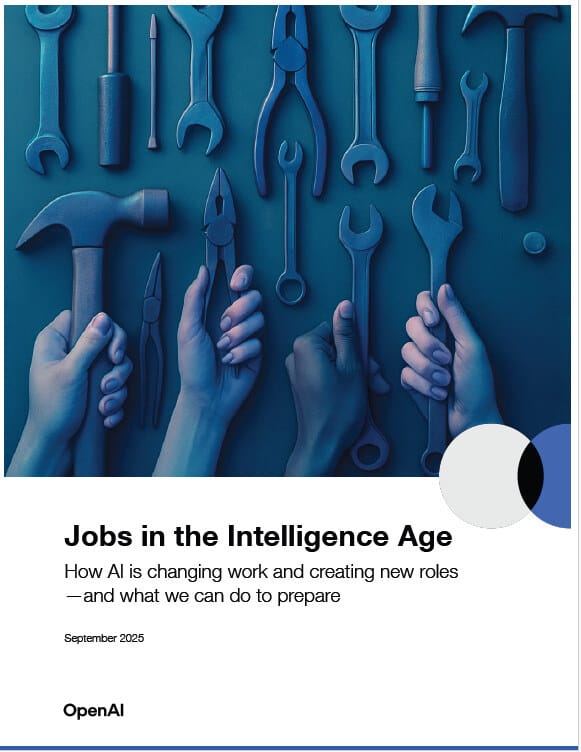
4. Jobs in the Intelligence Age
KEY CONCEPTS🗝️ AI Skill PremiumJobs requiring AI skills pay 50%+ higher wages.
🗝️ Demand Outpaces SupplyJob postings demanding AI expertise are growing faster than traditional IT roles.
🗝️ Sector ImbalancesFinancial services and tech lead adoption; public sector and healthcare trail.
LESSONS LEARNED🧠 Skills Beat TitlesEarnings growth tracks with skills, not job categories.
🧠 AI = New Productivity DivideCountries and companies with AI talent accelerate; laggards fall behind.
🧠 Upskilling Is UrgentReskilling pipelines need to expand or wage inequality will deepen.
WHY IT’S VALUABLE⚡ Talent Market Map: Essential for CHROs, recruiters, and workforce planners.⚡ Quant Evidence: Provides hard stats, not speculation, on AI’s labor impact.⚡ Future-Proofing: Helps leaders see where to invest in training.
5. Chief Economists’ Outlook
KEY CONCEPTS🗝️ Uneven AdoptionAI benefits concentrate in early adopters; laggards risk losing competitiveness.
🗝️ Enterprise DivideLarge firms scale AI faster; SMEs lag due to resource and skills gaps.
🗝️ Regional DisparitiesNorth America and Asia capture more value than Europe and developing regions.
LESSONS LEARNED🧠 First Movers Capture the UpsideEarly adopters set standards and attract top talent.
🧠 SMEs Need SupportWithout financing and infrastructure, smaller firms will fall behind.
🧠 Adoption = Strategy, Not Just TechOrganizational readiness and leadership buy-in drive outcomes.
WHY IT’S VALUABLE⚡ Benchmark Tool: Shows where adoption is happening fastest.⚡ Strategic Warning: Signals risks for firms and countries lagging in AI.⚡ Investor Insight: Highlights markets and sectors ripe for acceleration.

6. Making trade and AI work together to the benefit of all
KEY CONCEPTS🗝️ AI as a Trade DisruptorAI reshapes comparative advantage across industries.
🗝️ Existential & Ethical RisksFrontier AI can amplify misuse, fraud, and systemic risks.
🗝️ Green + AIAI must align with sustainability goals to balance innovation with environmental costs.
LESSONS LEARNED🧠 Trade Models Are ShiftingAI reduces reliance on low-cost labor as a competitive edge.
🧠 Sustainability Can’t Be OptionalAI adoption must consider carbon and resource intensity.
🧠 Governance Gaps Are RealCurrent frameworks can’t keep up with AI’s speed.
WHY IT’S VALUABLE⚡ Policy-Relevant: Directly links AI with trade, sustainability, and governance.⚡ Risk Map: Frames frontier AI not just as an opportunity but as systemic risk.⚡ Global View: Useful for policymakers and multinationals alike.

7. Finding the Right Balance in Uncertain Times
KEY CONCEPTS🗝️ AI as a Macroeconomic VariableAI is no longer a side note — it shapes forecasts on productivity, inflation, and sector resilience.
🗝️ Trade Wars Hit Tech HardestAI-heavy industries (semiconductors, software, advanced manufacturing) are most exposed to geopolitical friction.
🗝️ Climate Meets CapitalReal estate and infrastructure sectors must balance AI-driven efficiency with climate-neutral investment demands.
LESSONS LEARNED🧠 Tech Magnifies ShocksEconomic volatility is amplified in AI-linked sectors, meaning leaders can’t treat AI adoption in isolation from geopolitics.
🧠 Europe Risks Falling BehindWithout rapid infrastructure build-up, Europe could deepen its productivity gap with the US and Asia.
🧠 AI as Hedge & HazardWhile AI boosts resilience in supply chains and forecasting, its uneven diffusion creates new vulnerabilities.
WHY IT’S VALUABLE⚡ Investor-Grade Insight: Connects AI adoption with capital markets, energy, and real estate.⚡ Scenario Planning: Equips leaders with foresight on how trade and policy shocks ripple through tech economies.⚡ Strategic Lens: Blends macroeconomics, AI, and sustainability in one analysis.

8. Uneven geographic and enterprise AI adoption
KEY CONCEPTS🗝️ AI as Confidence DriverGlobal economic sentiment is increasingly tied to how quickly firms and countries deploy AI.
🗝️ Uneven GeographiesEmerging markets struggle to capture AI’s benefits, while advanced economies accelerate adoption.
🗝️ Inflation and AI ReadinessEconomists link productivity gains from AI with inflation moderation — but only in economies that scale adoption effectively.
LESSONS LEARNED🧠 Leaders Bet on AI for GrowthChief economists overwhelmingly see AI as a key pillar for competitiveness in the next 3–5 years.
🧠 Risks Are Not SymmetricDeveloping countries face higher downside risk from slow adoption, limited infrastructure, and capital flight.
🧠 Policy Must EvolveAI readiness isn’t just corporate — macro policy (tax, education, infrastructure) now directly impacts adoption curves.
WHY IT’S VALUABLE⚡ Pulse of Global Leaders: Reflects how decision-makers at the top interpret AI’s economic role.⚡ Cross-Country Benchmarking: Highlights divides in adoption and macro readiness.⚡ Forward-Looking: Offers directional signals for policymakers, corporates, and investors.

9. Threat Intelligence Report: August 2025
KEY CONCEPTS🗝️ AI as Structural FactorOECD forecasts now explicitly embed AI’s impact on growth, jobs, and productivity.
🗝️ Labor Market ShiftAutomation and augmentation reshape employment patterns, widening divides between high-skill and routine roles.
🗝️ Policy Coordination GapsFragmented national strategies risk creating uneven adoption and global imbalances.
LESSONS LEARNED🧠 AI Shapes Growth PathsCountries integrating AI strategically see stronger, more resilient GDP trajectories.
🧠 Without Policy, Inequality WidensAI adoption without reskilling programs entrenches divides between industries, regions, and demographics.
🧠 Collaboration MattersOECD stresses the importance of cross-country cooperation to avoid fragmented standards and adoption speeds.
WHY IT’S VALUABLE⚡ Trusted Forecasts: OECD credibility ensures leaders can rely on projections.⚡ Policy Signal: Direct guidance for governments and corporates shaping AI roadmaps.⚡ Global Balance View: Frames AI adoption as both an economic driver and a social risk.

10. Inclusive Artificial Intelligence for Development
KEY CONCEPTS🗝️ AI for DevelopmentAI is a general-purpose technology that can either accelerate Sustainable Development Goals or deepen divides.
🗝️ Readiness = Infrastructure + Data + SkillsThree levers define whether countries can capture AI value or fall behind.
🗝️ Case Studies Ground TheoryReal-world applications in agriculture, manufacturing, and healthcare show AI’s potential in developing contexts.
LESSONS LEARNED🧠 Inequality Is Built InWithout deliberate action, frontier AI concentrates power in a few firms and countries.
🧠 Local Adaptation WinsAI policies must match local infrastructure and workforce realities — one-size-fits-all fails.
🧠 Partnerships Are KeyCollaboration between governments, private sector, and multilateral institutions unlocks scaling in the Global South.
WHY IT’S VALUABLE⚡ Global South Lens: A rare report that centers inclusivity and equity in AI development.⚡ Policy + Practice: Bridges high-level strategy with concrete case studies in farming, factories, and healthcare.⚡ Governance Blueprint: Offers actionable recommendations for national and international AI governance.

🔚 Final Thought:
Across these reports, one theme is impossible to ignore: AI has shifted from promise to structural force. It is no longer a narrow technology trend — it is now shaping GDP forecasts, labor markets, corporate strategy, and even the rules of global trade.
The evidence converges on three truths:
Access defines outcomes — whether inside firms (training gaps between CEOs and interns) or across regions (advanced economies accelerating while developing nations risk exclusion).
Adoption is uneven but decisive — first movers capture disproportionate value, while laggards face widening competitiveness gaps.
Governance and inclusion are non-negotiable — without policies to ensure equity, AI risks amplifying inequality more than productivity.
What makes this moment urgent is that AI is now macroeconomic, not experimental. It drives wages, inflation, competitiveness, and sustainability. For leaders, the choice is clear: treat AI as a side project and fall behind, or embed it into the core of economic and organizational strategy.
This report is not about hype or speculation. It is about the playbooks, risks, and metrics already shaping the future of work, leadership, and development. The path forward is not to wait, but to scale responsibly, inclusively, and with clarity.
👉 The future is unevenly distributed. Whether it becomes a widening divide or a shared advantage depends on the choices leaders make today.
Stay smart. Stay ahead. OG Approved. 💡