- OG Approved AI & Tech News
- Posts
- META GOES NUCLEAR ON AGI
META GOES NUCLEAR ON AGI
✅ Estimated Reading Time: 8–9 minutes

Billions in Capex. Talent wars. Gigawatt clusters.
Zuckerberg isn’t just building AI. He’s building a new intelligence layer for the planet — powered by money, machines, and mission-grade urgency.
In this deep dive, we unpack everything that Meta is doing to dominate the future of artificial general intelligence (AGI), why it matters to every enterprise, and how this infrastructure shift could redraw the global tech map.
1. The Billion-Dollar Reality Check

On July 14, 2025, Mark Zuckerberg dropped the biggest signal yet that Meta is all-in on superintelligence.
“For our superintelligence effort, I’m focused on building the most elite and talent-dense team in the industry. We’re also going to invest hundreds of billions of dollars...”— Zuckerberg on Threads
That statement, short as it is, rewired the entire AI landscape. Meta is no longer just a player in the AI race. It's trying to own the rails.

The numbers back it up:
Capital expenditure for 2025: Raised to $64–72 billion, most of it earmarked for AI compute infrastructure. (Reuters, July 14, 2025)
Prometheus cluster: Launching in 2026, this is Meta’s first multi-gigawatt supercluster dedicated to AGI workloads.
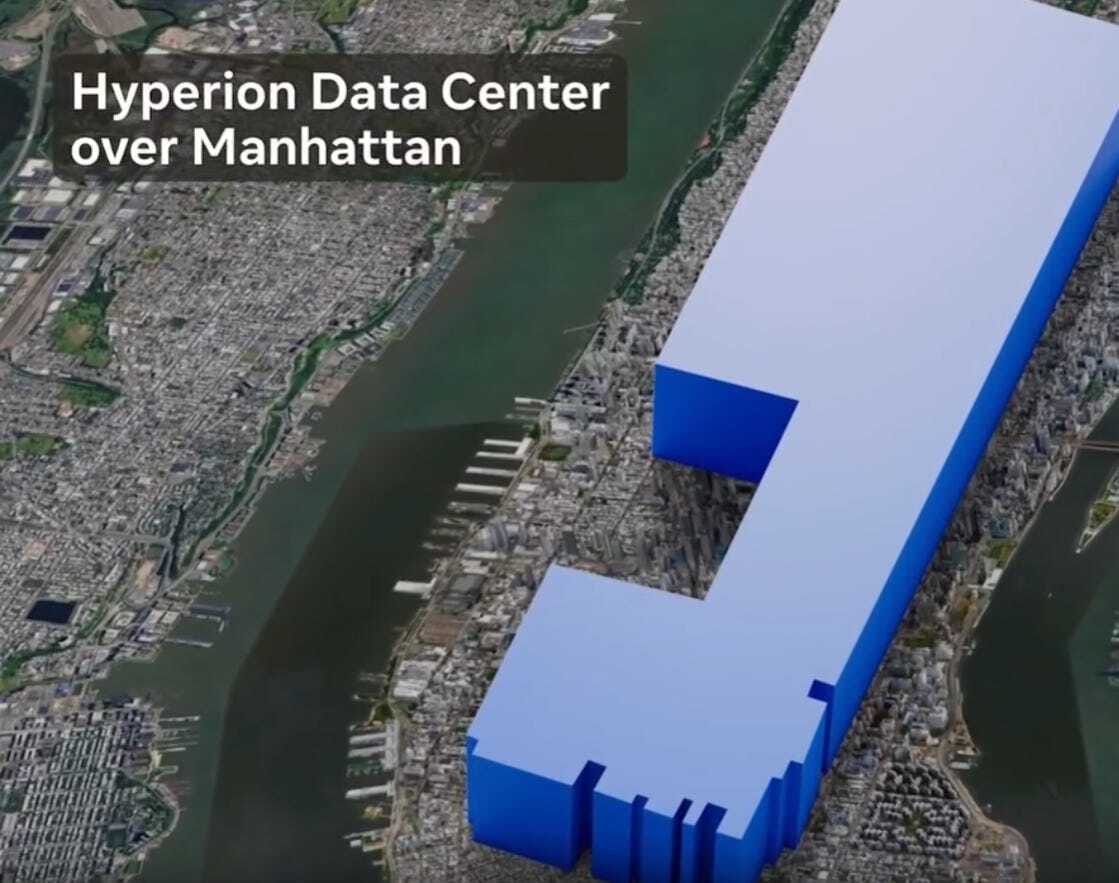
Hyperion: A mega-cluster being built in Louisiana, planned to scale to 5 gigawatts — rivaling the energy draw of a nuclear plant and the physical footprint of Manhattan. (Fast Company)
Meta is now playing a game of scale: build fast, build big, and build deep.
2. Superintelligence Labs: The Inner Circle
To lead this charge, Meta launched a new unit: Superintelligence Labs. This isn’t a brand stunt. It’s a structural reorganization designed to concentrate firepower.

Key Appointments:
Alexandr Wang, former CEO of Scale AI — now Chief AI Officer.
Nat Friedman, former CEO of GitHub — now leading applied research and product.

These two bring operational excellence and startup aggression. Meta wants to blend scale with velocity. And that means building differently.
The Superintelligence Labs team is:
Kept small (target size ~50, dubbed the "Fantastic 50")
Given unlimited GPU access
Structured for direct interface with Zuck
Zuckerberg himself is said to be personally involved in this team’s ops. He wants a mix of elite talent, sovereign-level infrastructure, and zero bureaucracy.
Compensation? Off the charts:
Offers of $200 million+ reported to lure talent like Ruoming Pang, formerly at Apple AI. (Economic Times)
Aggressive poaching from OpenAI, DeepMind, Google Brain, Anthropic, and Apple.
Zuckerberg isn’t just building infrastructure. He’s buying capability density.
3. Tent-Based Data Centers: Infrastructure at Wartime Speed
Let’s talk about how Meta is deploying that infrastructure.
In a move straight from Tesla’s playbook, Meta is building tent-based pop-up data centers.
These are temporary industrial-scale facilities made of fabric tents, deployed on undeveloped land or parking lots. Inside:
Racks of H100 and B200 GPUs
Liquid cooling rigs
Diesel generators and mobile power grids
Portable HVAC units
Why tents?
No waiting for zoning or construction permits
Deployable in weeks, not years
Fully functional for training and inference workloads
“It’s wartime manufacturing. Tesla used it to save Model 3. Meta is using it to leapfrog AGI.”— Business Insider (source)
The message: scale now, optimize later. Meta is playing an industrial game of inches. Whoever gets compute first, wins.
4. Superclusters and Supervision: The Ethical Lag
The size of these clusters introduces major externalities.
A Fast Company investigation warns:
These data centers could rival U.S. steel industry emissions by 2030
Estimated 1,300 premature deaths/year from energy pollution unless mitigated
Meta has not disclosed its clean energy strategy or emissions roadmap
This isn’t a minor gap. Meta risks triggering regulatory backlash if sustainability doesn’t match scale. As AGI efforts accelerate, climate governance must follow compute.

5. Most Enterprises Are Still Stuck in the Sandbox
While Meta is wiring up Prometheus, most companies are still fiddling with GPT prompts in their browsers.
“The problem isn’t model capability. It’s that we don’t yet know how to use them intelligently.”— Kjell Carlsson, VP Analyst, Gartner

Sound familiar?
Here’s what most orgs are doing:
Piloting chatbots with no roadmap
Running PoCs without ownership or budget
Lacking infrastructure to deploy models at scale
The real opportunity today isn’t just LLM access. It’s AI orchestration:
Multi-agent systems
Autonomous decision-making layers
Long-context planning architectures
Meta’s infrastructure plays are tailored for these use cases. Not chat summarization.
6. The Strategic Equation: Talent + Infra + Tempo
Zuckerberg’s AGI play boils down to this:
(Elite Talent + Sovereign Compute) x Founder Tempo = Platform Power
The implication for other tech giants:
OpenAI needs to match infra depth
Alphabet needs to match tempo
Amazon needs to refocus on models
Apple needs to come out of the shadows
And for enterprises?
If you don’t own your AI delivery pipeline… you’re just a tenant in someone else’s model.
7. What This Means for You
If you’re leading AI in your company, here’s the checklist:
✅ Stop waiting on APIs
Models like GPT-4, Claude, Gemini are great — but relying only on them creates dependency. Build multi-model optionality.
✅ Design your orchestration layer
Move from siloed prompts to multi-agent flows. Define how agents connect, make decisions, and act.

✅ Build your infra edge
Cloud? On-prem? Hybrid? Doesn’t matter. What matters: you have predictable, high-throughput compute to support your roadmap.
✅ Own the roadmap
Most enterprises don’t have an AI plan. They have a series of internal experiments. Flip it: start with outcome, then define architecture.
✅ Hire for AI operations
You don’t just need researchers. You need delivery engineers. MLOps architects. AI product managers. People who ship, not just speculate.
8. The OG Conclusion
Meta is no longer an app company. It’s becoming an AI superpower. Not because it has the best models. But because it’s industrializing AI deployment.
Zuckerberg is making it clear:
Software will be owned by those who own the compute
AGI will live on infrastructure, not APIs
Winning means vertical control over talent, power, and scale
And for everyone else? Time to decide:
Are you buying AI like a service?
Or are you building AI like an asset?

Bonus: OG's 3-Point Playbook for AI Leaders
Infrastructure First: Get serious about latency, throughput, and GPU architecture. You can’t orchestrate AI without raw compute.
Orchestration Layer: Move beyond prompt engineering. Build pipelines of autonomous agents, decision trees, and fallback logic.
Outcomes, Not Demos: Every AI project should tie to a P&L line. No ROI? No roadmap.

Want help building your AI delivery engine?
I don’t sell hype. I architect it.
Book time: https://calendly.com/oliviergomez
#AGI #Meta #Superintelligence #Zuckerberg #AIInfrastructure #OGApproved
This article references reporting from Reuters, Bloomberg, Fast Company, Threads, Business Insider, Economic Times, Gartner, and IBM Think. Data and quotes are sourced and attributed accordingly.