- OG Approved AI & Tech News
- Posts
- AI Orchestration Will Kill the “Best Model” Obsession
AI Orchestration Will Kill the “Best Model” Obsession
Let’s say it clearly.

Olivier Gomez (OG)
January 13, 2026

Let’s say it clearly.
If your AI strategy depends on choosing the “best model”, you are already behind.
Not because the models are bad.Not because progress has slowed.
But because models no longer decide who wins.
That phase is over.
The companies pulling ahead right now are not winning because they picked GPT-5.1, Claude, Gemini, Llama, or the next benchmark darling.
They are winning because they don’t care which model they use.
They built systems that decide:
when to use a model
which model to use
when to switch
how to control cost and risk
how to keep humans in charge
That system has a name.
Orchestration.
And it is quietly killing the obsession with the “best model”.
The obsession made sense until it didn’t.

To understand why this shift matters, we have to be fair about where we came from.
In late 2022 and early 2023, model choice genuinely mattered.A lot.
Some models could reason.Others hallucinated constantly.Some handled code.Others have barely structured text.
At that time:
Picking the right model was a real competitive decision
Benchmarks gave direction
Lock-in felt acceptable
If you chose badly, you felt it immediately.
But that environment did not last.
Model capability is converging. This is not a hot take.
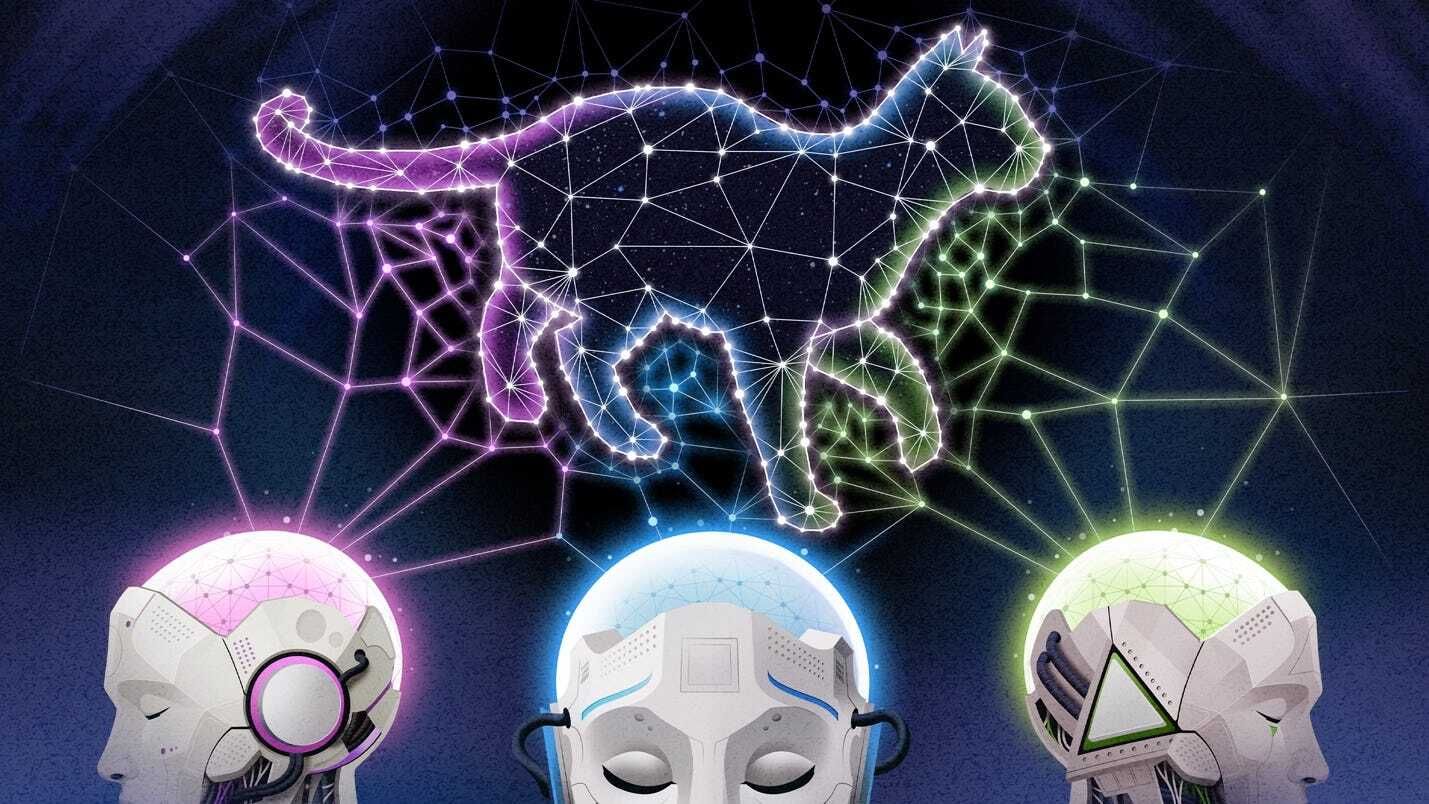
Across 2023 and 2024, something predictable happened.
Model quality compressed.
Independent evaluations show that for many enterprise-relevant tasks:
summarization
extraction
Q&A
classification
basic reasoning
first-pass coding
…the performance gap between top-tier models narrowed significantly.
This is not because innovation stopped.It’s because the baseline moved up.
Exactly what happens in every technology market once it matures.
CPUs converged.Cloud providers converged.Databases converged.
AI models are now doing the same.
You can still argue about “best”.But the difference rarely justifies architectural dependence anymore.
Source (verified):Stanford Human-Centered AI Institute, AI Index Report 2024Artificial Analysis, LLM Performance vs Cost Trends 2024
Benchmarks stopped being decision tools

Here is an uncomfortable fact the industry avoids.
Benchmarks no longer map cleanly to business reality.
Why?
Because benchmarks:
test narrow, artificial tasks
reward benchmark-specific optimization
ignore cost, latency, reliability, governance
collapse real workflows into isolated prompts
Even model providers know this.
Over the past year:
Participation in public leaderboards declined
Vendors emphasized “real-world usage” over rankings
Enterprises quietly built their own internal tests
That is how you know a metric has reached its limits.
When the people closest to the system stop trusting the benchmark, it stops driving outcomes.
Source:MIT Technology Review, analysis on benchmark saturation and evaluation limits, 2024Stanford HAI AI Index 2024
Enterprises don’t run prompts. They run systems.
Most AI conversations fundamentally misunderstand how work happens.
They assume:
one user
one prompt
one response
one success metric
That is not enterprise reality.
Real enterprise work looks like:
multiple data sources
structured + unstructured inputs
policies and permissions
cost ceilings
fallbacks
exceptions
audits
human overrides
No single model solves that.
The moment AI leaves a demo and touches production, you are no longer running a chatbot.
You are running a system.
And systems fail or succeed based on orchestration, not raw intelligence.

What orchestration actually is (without marketing language)
Let’s strip the buzzwords and keep it practical.
AI orchestration is the control layer that decides:
which model is appropriate for a given task
which tools should be called
which data can be accessed
what happens when confidence is low
how failures are handled
when a human must intervene
It is not:
a nicer prompt
a model wrapper
a chain of calls with no safeguards
It is runtime decision-making for probabilistic systems.
Think of it as the difference between:
a script that always runs
and a system that chooses what to run based on context
That distinction becomes existential at scale.

Why “best model thinking” collapses in production

This is where theory meets reality.
1. Cost blows up first
The “best” model is usually:
the most expensive
the slowest
unnecessary for routine tasks
Using it everywhere is like using a Formula 1 car to deliver groceries.
Orchestration allows:
cheap models for simple work
powerful models for edge cases
rules that prevent waste
Without it, cost spirals are guaranteed.
2. Reliability collapses second
No model is consistently best across:
all domains
all languages
all data qualities
all edge cases
Production systems need:
fallbacks
retries
validation
tiered confidence handling
A single-model architecture has none of that.
When it fails, humans step in.Quietly.Expensively.
3. Governance becomes impossible
Enterprises require:
repeatability
traceability
audit trails
predictable behavior
A monolithic model does not provide this by default.
Orchestration allows:
policy enforcement
explainable routing
controllable behavior
structured escalation
Without it, AI becomes uncontrollable noise.
4. Switching becomes painful
Models change fast.Prices change.Terms change.Performance shifts.
If your system is hard-wired to “the best model”, every change becomes a crisis.
With orchestration:
model switching is operational
not strategic
not political
not existential
That alone justifies the architecture.
Integration is not orchestration. This matters more than people admit.
Many confuse the two.

Integration:
connects systems
Orchestration:
decides between them
An integration flow moves data from A to B.
An orchestration layer decides:
whether A or B should be used
when to use C instead
when to stop and escalate
With deterministic software, static flows survive.
With AI, they don’t.
Probabilistic systems demand runtime control.
Real AI systems already do this
This is not speculative.
At scale, advanced AI systems already:
route tasks across models
compare outputs
validate responses
mix AI with deterministic logic
fall back automatically
Publicly documented engineering practices from hyperscale’s confirm this direction.
They don’t talk about “best models”.They talk about systems, reliability, and control.

Sources:Microsoft, Azure AI architecture and reliability guidance, 2024Google / DeepMind engineering publications on scalable AI systems, 2024
The real competitive advantage no one markets well
Here’s the brutal truth.
Models improve fast.But systems compound.
Every time you add:
a new tool
a new data source
a new safeguard
a new policy
a better fallback
Your orchestration layer becomes stronger.
Meanwhile, your dependency on any single model weakens.
That is how durable advantage is built.
Not by chasing the smartest brain.But by building the best nervous system.

What this means if you are non-technical
If you are a CEO, COO, or CFO, here is the takeaway.
Stop asking:
“Which model should we standardize on?”
Start asking:
“How do we stay flexible without losing control?”
“How do we keep costs predictable?”
“How do we switch vendors without rewriting everything?”
“How do we scale without babysitting AI output?”
Those are orchestration questions.
And if your teams can’t answer them, model choice won’t save you.
What this means if you are technical
If you build real systems, you already know the pain points:
state management
observability
retries
exception handling
human overrides

None of these are solved by a better model.
They are solved by architecture.
AI without orchestration is just compute with hope.
The future is model-agnostic by design

Zoom out.
The winning AI architectures will be:
model-agnostic
tool-centric
policy-driven
observable
auditable
In those systems:
models become interchangeable components
“best model” debates lose relevance
delivery capability becomes the differentiator
That future is not theoretical.
It is already forming inside organizations that moved beyond demos and pilots.
Quietly.Without hype.Without LinkedIn posts about benchmarks.
Final truth
The obsession with the “best model” was a necessary phase.It helped wake the market up.
But clinging to it now is a sign of immaturity.
AI will not be won by the smartest model.It will be won by the best-orchestrated system.
If your AI strategy depends on one model,you already made a decision you will regret.